1 Corinthians Week 3
Notes for the August 16, 2026 message:

Scriptures used: 1 Corinthians 4:1-7; Hebrews 13:17; 1 Thessalonians 5:12-13; 1 Timothy 5:17; Proverbs 12:1, 18; 1 Corinthians 1:30; 2:1-5; 3:16; 4:20
Scriptures referenced: 1 Corinthians 1-4; Romans 12:8; 13:1-2; 1 Peter 2:13-14; Titus 3:1; Acts 5:29; 26:12-18; Ephesians 4::11-15
Honoring Leadership
Scripture teaches us to honor and submit to established authority no matter the area of leadership.
The family is one of the first places we learn about authority and submission.
Parents should ultimately teach children to transfer their dependence and obedience from them to God.
Disagreeing With Leadership
Human authority is never greater than God's authority.
When human authority conflicts with God's will, we stand on our convictions without becoming divisive.
Shadrach, Meshach, and Abednego provide an example of respectfully refusing to compromise their allegiance to God.
Honoring Spiritual Authority
Scripture also calls believers to honor spiritual/church leadership.
Those in the body have a responsibility to honor leadership while those in leadership have a responsibility to lead faithfully.
Leaders Are Servants
The fundamental identity of Christian leadership is servanthood.
Church leadership isn't about “my will be done.” It’s about God’s will be done. It’s not about personal agendas, it’s about kingdom purposes.
Leadership or influence that any person has should be seen as a position of power for personal benefit, but rather as a position of service to benefit others.
Leaders Are Stewards
A steward manages something that ultimately belongs to someone else.
Church leaders are commissioned to steward the gospel of Christ - faithfully teaching the truth of God’s word.
Church leaders are also called to faithfully steward the people God has entrusted to them. They should use their gifts to equip believers, build up the church, help people become more like Christ, providing opportunities to serve the purposes of Christ.
Leadership or influence that any person has should be stewarded faithfully and responsibly.
Handling Criticism
When offering critique of leadership we should consider the heart behind it.
Healthy accountability and wise evaluation are valuable. We have to learn to differenitate between constructive and critical.
We can't manage everyone else's opinions, but we can manage our response.
Platform vs. Pedestal
We can appreciate and learn from leaders without making them idols. No church leader died for us.
Leaders can have a platform without being placed on a pedestal.
Our hope isn't in a perfect church or perfect leader. Paul's letters demonstrate that imperfect people can still be part of God's church.
Our Identity Is in Christ
Because our identity is secure in Christ:
We serve with excellence without having to perform for approval.
We're free from the opinions of others.
We're even free from being controlled by our own opinions of ourselves.
We know we're valued by God.
We can receive correction and grow without allowing criticism to define us.
We love people without living for their approval.
We serve others without becoming subservient to them.
We steward our God-given gifts faithfully rather than selfishly.
We use our influence to serve others and glorify God.
Personal Application
Identity
Where am I currently finding my identity—Christ, my role, my success, my relationships, my reputation, or something else?
Service
Who has God placed around me that I can intentionally serve this week?
Stewardship
What gift, opportunity, relationship, or responsibility has God entrusted to me that I need to steward more faithfully?
Criticism
How do I typically respond when someone criticizes me? Do I immediately reject it, internalize it, become defensive, or prayerfully evaluate it?
Leadership
Am I honoring and praying for the spiritual leaders God has placed in my life?
Hurt
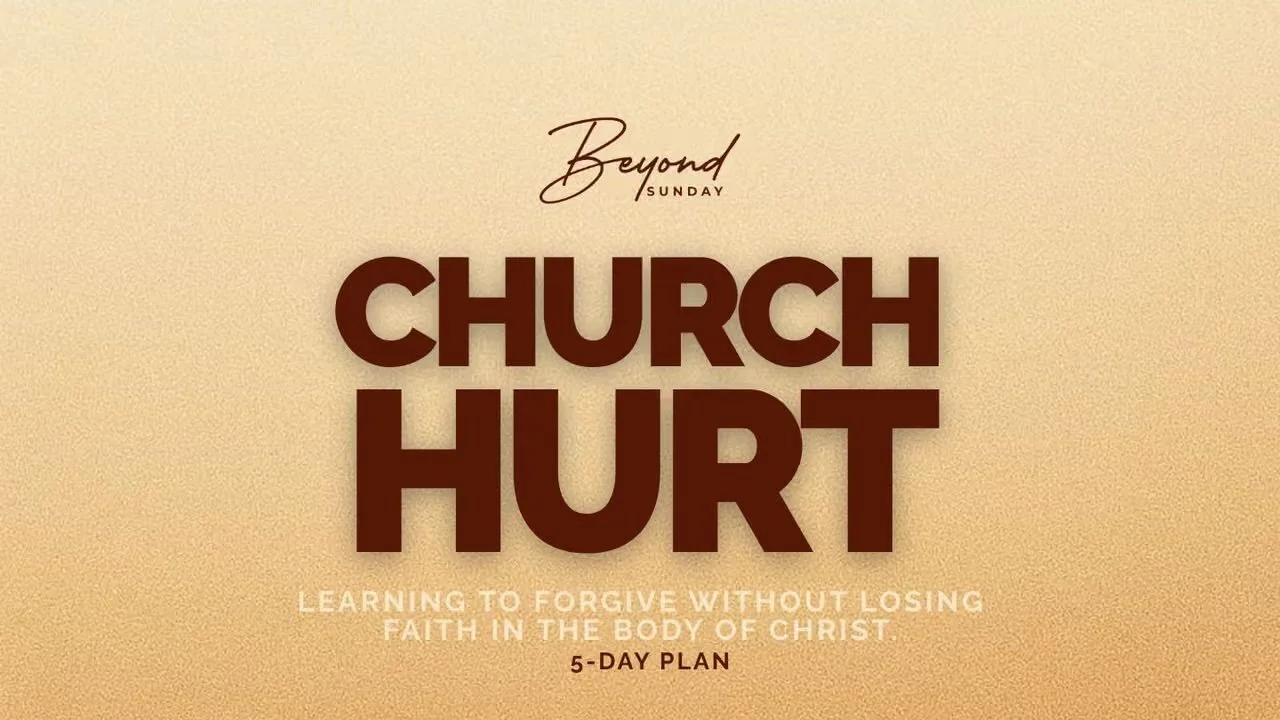
Is there something from a past church or leader that I need to surrender to God and allow Him to heal?
Click the image to start a new 5 day devotion in YouVersion: